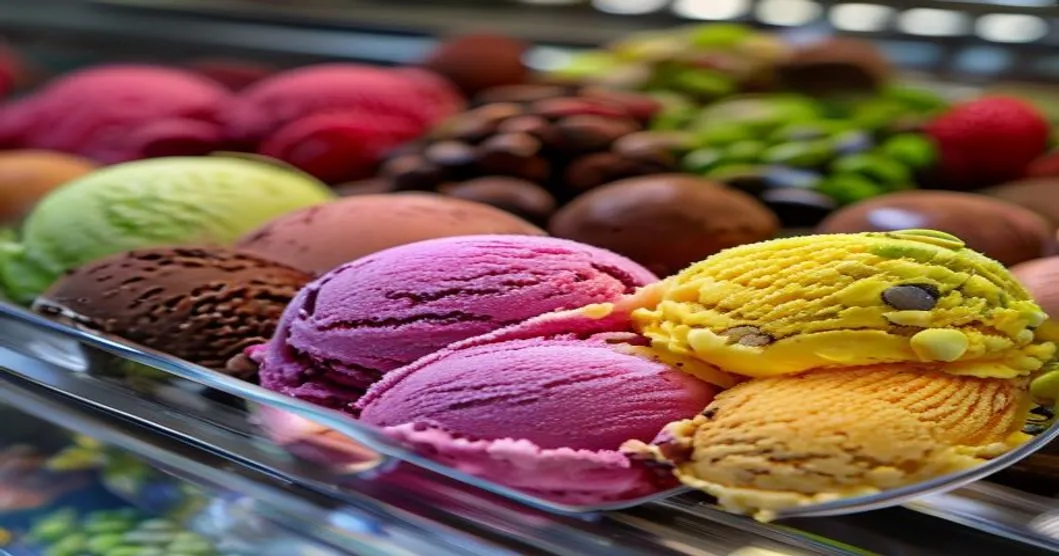
How Many Calories Are in Gelato?
A standard scoop of gelato has 150 to 200 calories, though the exact number swings a lot depending on flavor, scoop size, and whether it is fruit-based or cream-based.Gelato is often assumed to be lower calorie than ice cream because it has less fat, but that is only part of the story. Below, we break down calories by flavor, by scoop size, explain the science behind why gelato and ice cream end up closer in calories than most people expect, and compare gelato directly against ice cream so you know exactly what you are getting.
Gelato Calories By Scoop Size and Flavor Type
| Flavor Type | Small Scoop (70g) | Large Scoop (100g) |
|---|
| Fruit-based (sorbet-style) | 90-110 kcal | 130-160 kcal |
| Chocolate | 140-160 kcal | 200-230 kcal |
| Cream-based (vanilla, stracciatella) | 150-170 kcal | 210-240 kcal |
| Nut-based (pistachio, hazelnut) | 175-200 kcal | 250-280 kcal |
Notice fruit-based gelato is meaningfully lower than nut-based, often by 100+ calories at the same scoop size. That gap comes from fat content, nut gelato uses cream and ground nuts, while fruit gelato leans on fruit puree and water for its base.
Gelato Calories By Popular Brand (Talenti, Häagen-Dazs, Ciao Bella)
Generic scoop estimates are useful for a gelateria counter, but most people checking calories at home are looking at a tub in their own freezer. Here is how the calorie count actually compares across the brands you are most likely to have on hand, based on the serving sizes printed on each brand's own nutrition label.
| Brand & Flavor | Serving Size | Calories |
|---|
| Häagen-Dazs Gelato (single-serve cup) | 1 cup (72g) | 140-150 kcal |
| Häagen-Dazs Dark Chocolate Chip Gelato (tub) | 1/2 cup | 270 kcal |
| Talenti Sea Salt Caramel / Dark Chocolate | 2/3 cup | 320 kcal |
| Ciao Bella Pistachio | 1/2 cup | 250 kcal |
| Ciao Bella Strawberry | 1/2 cup | 180 kcal |
| Villa Dolce Chocolate Gelato (grocery store) | 1/2 cup | 200 kcal |
| Private-Label Vanilla Bean Gelato (grocery store) | 1/2 cup | 160 kcal |
Two things jump out here. First, Häagen-Dazs' portion-controlled single-serve gelato cups (140-150 kcal) run noticeably lower than their own tub-based Dark Chocolate Chip Gelato at 270 kcal for just half a cup, purely because the tub serving is bigger and richer. Second, Talenti's 2/3-cup serving size is larger than the 1/2-cup standard most other brands use, so its 320 kcal figure is not really "300+ more calories than Ciao Bella," it is a bigger scoop counted against a smaller one. Always check the serving size line before comparing two tubs side by side, since brands do not standardize portion size the way they standardize the word "gelato" itself. If premium imported brands are out of budget, standard grocery-store gelato like Villa Dolce or a store's private-label vanilla bean runs in a similar calorie range to the name brands, so you are not paying extra calories for the fancier label.
Full Nutrition Label: Cream-Based Gelato (100g)
Here is a representative label for a standard cream-based gelato like vanilla, based on percent daily values for a 2,000-calorie diet. Actual numbers vary by brand, since gelato is not standardized by law the way ice cream is.
| Nutrient | Amount | % Daily Value |
|---|
| Calories | 160-215 | - |
| Total Fat | 6-9g | 8-12% |
| Saturated Fat | 4-5g | 20-25% |
| Cholesterol | 20-30mg | 7-10% |
| Sodium | 40-65mg | 2-3% |
| Total Carbohydrate | 20-28g | 7-10% |
| Sugars | 17-22g | - |
| Protein | 3-5g | - |
| Calcium | 100-150mg | 8-12% |
Two things stand out here compared to what people expect. First, sugar is comparable to or even higher than ice cream, because sugar is doing double duty in gelato: it sweetens the product and also lowers its freezing point to keep the texture smooth despite the lower fat content. Second, saturated fat as a percentage of total fat is high, since most of the fat that remains in gelato comes straight from dairy.
The Nutritional Upside: Calcium and Flavor-Based Antioxidants
Calories are only half the picture. A standard serving of gelato also delivers a meaningful amount of calcium, often over 10% of the recommended daily intake, since gelato is milk-based at its core, according to a
gelato nutrition breakdown from Amato Gelato. That is a genuine nutritional plus that a plain sugary dessert does not offer.The flavor you pick can add a small nutritional bonus on top of that. Dark chocolate gelato carries some of the same antioxidants found in dark chocolate itself. Citrus flavors bring a bit of vitamin C. Berry flavors like blueberry pick up polyphenols from the fruit. None of this turns gelato into a health food, but it does mean your flavor choice is not purely about taste, it is doing a little nutritional work too.
Calculate Your Exact Gelato Calories
Use this calculator to check your total based on flavor type and how many scoops you are having.
Gelato vs Ice Cream: Why the Calorie Difference Is Smaller Than You Think
Gelato has a reputation for being the "lighter" option, and it is true that gelato is typically made with more milk and less cream than ice cream, giving it a lower fat percentage, often 4-9% fat compared to 10-16% or more in premium ice cream. In the United States, ice cream is not just a marketing term, it is a legal category:
FDA regulation 21 CFR 135.110 requires at least 10% milkfat for a product to be labeled "ice cream" in the US, which is part of why the fat gap with gelato is so consistent across brands.But gelato is also churned much slower, which means it has far less air whipped into it than ice cream. In the industry, this air content is called "overrun." Gelato is typically churned to about 20-30% overrun, while mainstream ice cream commonly runs 50-100% overrun, meaning a tub of ice cream can be up to half air by volume, according to
Zingerman's breakdown of gelato versus ice cream production. This makes gelato denser, so a scoop of gelato actually weighs more than a same-size scoop of ice cream.The lower fat percentage and the higher density end up roughly canceling out, which is why a scoop of gelato and a scoop of ice cream often land in a similar calorie range, even though gelato is technically "lower fat" by percentage. The real calorie savings from gelato usually comes from flavor choice (fruit-based options) and the smaller traditional Italian scoop size, rather than from gelato being inherently lighter than ice cream across the board.
Where Gelato Comes From
Gelato traces back to Renaissance Florence in the 1560s, when the architect and engineer Bernardo Buontalenti is credited with creating an early version for a banquet hosted by the Medici family, using milk, eggs, honey, and ice. That milk-and-egg base, rather than the cream-heavy formulas used elsewhere in Europe at the time, is essentially the same principle modern gelato still follows: less fat, more intense flavor. Italian gelato spread through Europe over the following centuries and remained a smaller-batch, artisan product for most of its history, which is part of why traditional gelaterias in Italy still serve smaller scoops than a typical American ice cream shop.
What Actually Changes Gelato Calories
- Scoop size: a 100g scoop can have 50% more calories than a 70g scoop of the same flavor
- Cone choice: a waffle cone can add 100-150 calories on top of the gelato itself
- Toppings: whipped cream, sauces, or candy pieces can each add 50-100 calories
- Number of flavors: in many shops, two flavors in one cup still means eating a full double portion, not a lighter version of two tastes
- Commercial vs artisan recipes: mass-produced gelato often adds extra cream, stabilizers, and sugar to extend shelf life, closing the calorie gap with ice cream even further
Gelato vs Sorbetto: Not the Same Thing
Sorbetto is often grouped with gelato, but it is a different product nutritionally. Sorbetto is dairy-free, made from fruit puree, water, and sugar, which means it has 0-1g of fat per serving but can carry as much or more sugar than milk-based gelato. If you are avoiding dairy or saturated fat specifically, sorbetto is the better choice. If you are watching sugar intake more closely than fat, cream-based gelato and sorbetto end up more similar than the "fruit is healthier" assumption suggests.If dairy is the issue rather than fat itself, many gelaterias and grocery brands now also offer dairy-free gelato made with almond, oat, or coconut milk instead of dairy milk. These versions typically land in a similar calorie range to traditional gelato, since the sugar and base structure stay similar, but the fat shifts from saturated dairy fat to unsaturated plant fat, which is worth knowing if a doctor has told you to watch saturated fat specifically rather than total calories.
How Gelato Fits Your Daily Calories
At 100-200 calories per scoop depending on flavor, gelato can fit into most calorie budgets as an occasional treat. If you are tracking toward a specific daily target, check your
TDEE Calculator first, then use the calculator above to see how a scoop or two fits what is left in your day. If you are already tracking your carbs, sugar, and fat split closely, our
macro calculator guide can help you see exactly where a scoop of gelato lands inside your daily numbers. Choosing fruit-based flavors, sticking to the traditional smaller Italian scoop size, and skipping the waffle cone are the three easiest ways to enjoy gelato while keeping the calorie count down.For more calorie breakdowns like this one, browse our full
calorie guide library or check the
blog for the latest additions.
Common Mistakes That Add Hidden Calories
- Assuming all gelato is automatically lower calorie than ice cream, when density often cancels out the fat savings
- Choosing a large cup instead of a small one out of "better value" thinking, which can add 50% more calories
- Adding a waffle cone by default, without realizing it can double the calorie count of a small scoop
- Ordering nut-based flavors expecting the same calorie count as fruit flavors, when the gap can be 100+ calories
- Treating sorbetto as automatically "diet food" because it is fat-free, when its sugar content can match or exceed cream-based gelato
- Comparing two brands' calorie counts without checking the serving size line first, since a 2/3-cup serving will always look "worse" next to a 1/2-cup serving of the same richness
Frequently Asked Questions
How many calories are in gelato?
A standard scoop of gelato has 150-200 calories, though fruit-based flavors can be as low as 90-110 calories and nut-based flavors can reach 250+ calories for a large scoop.How many calories are in chocolate gelato?
Chocolate gelato typically has 140-160 calories for a small scoop (70g) and 200-230 calories for a large scoop (100g).How many calories are in a scoop of gelato?
A single scoop generally ranges from 100 to 200 calories depending on flavor and scoop size, with fruit-based flavors on the low end and nut-based flavors on the high end.How many calories are in Talenti gelato?
A 2/3-cup serving of Talenti gelato, such as Sea Salt Caramel or Dark Chocolate, runs around 320 calories. That serving size is larger than the 1/2-cup standard most other brands use, so it is not directly comparable to a half-cup number from another tub.How many calories are in Häagen-Dazs gelato?
Häagen-Dazs' portion-controlled single-serve gelato cups have about 140-150 calories per 72g cup. Their tub-based gelato flavors, like Dark Chocolate Chip, run closer to 270 calories for a half-cup serving.Is gelato healthier than ice cream?
Gelato has less fat by percentage, but it is also denser due to slower churning and lower overrun, so the calorie difference between gelato and ice cream is often smaller than most people expect. Sugar content in gelato is frequently comparable to, or higher than, ice cream. On the plus side, gelato is a genuine source of calcium, and some flavors carry small amounts of antioxidants from their ingredients.What is the lowest calorie gelato flavor?
Fruit-based flavors, similar to sorbet, are typically the lowest calorie option since they use fruit puree and water instead of cream as their base.Why does gelato taste more intense than ice cream?
Gelato is served at a slightly warmer temperature and has less air whipped into it, which concentrates the flavor per spoonful. Ice cream's higher fat content also coats taste receptors more, muting flavor slightly compared to gelato's leaner base.Is sorbetto lower calorie than gelato?
Usually yes in terms of fat, since sorbetto has no dairy, but its sugar content can be just as high or higher than cream-based gelato, so total calories are not always dramatically lower.Is there dairy-free or vegan gelato, and how many calories does it have?
Yes, many brands now make dairy-free gelato with almond, oat, or coconut milk. Calories usually land in a similar range to traditional gelato, but saturated fat drops since the fat source shifts from dairy to plant-based fat.