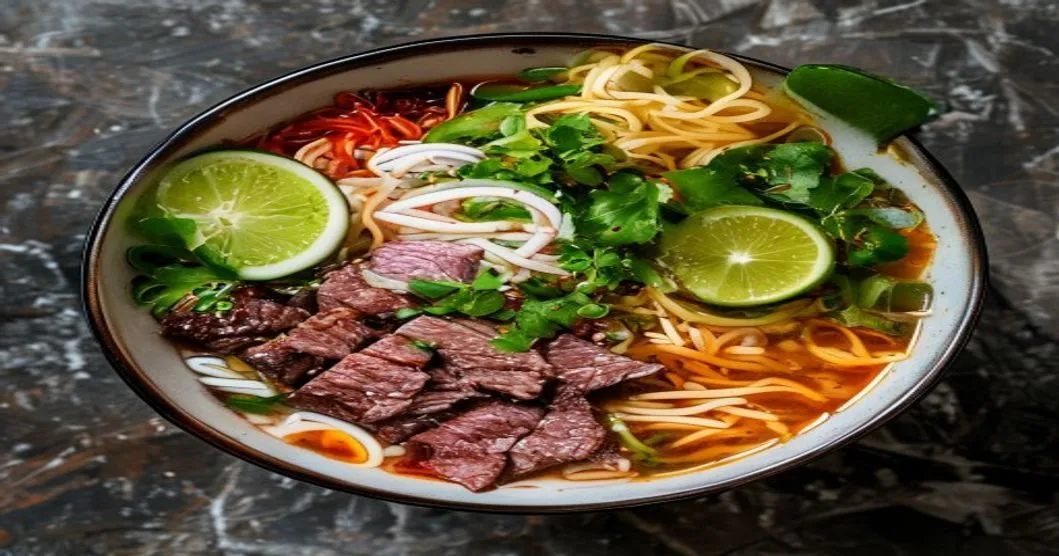
How Many Calories Are in Pho?
A standard restaurant bowl of pho has 350 to 600 calories. That is a wide range, and it comes down to three things: the type of protein, how much broth fat is skimmed off, and how generous the noodle portion is.
Below, we break down calories for chicken pho, beef pho, and vegetarian pho separately, look at what the broth alone contributes, and show you how to adjust your order to hit a lighter number without losing the flavor.
Pho Calories By Type
| Type | Calories | Protein |
|---|---|---|
| Chicken Pho (Pho Ga) | 300-450 kcal | 25-30g |
| Beef Pho (Pho Bo) | 350-500 kcal | 28-35g |
| Vegetarian Pho | 250-400 kcal | 10-15g |
Chicken pho comes in lower than beef pho mainly because chicken breast has less intramuscular fat than most beef cuts used in pho, like brisket or fatty flank. Vegetarian pho is the lightest option overall, though it typically has the least protein unless tofu is added generously.
Full Nutrition Breakdown: Carbs and Fat Too
Calories and protein only tell half the story. Here is what each bowl looks like once you add carbs and fat, so you can see the full picture, not just one number.
| Type | Carbs | Fat |
|---|---|---|
| Chicken Pho (Pho Ga) | 40-55g | 3-10g |
| Beef Pho (Pho Bo) | 40-60g | 5-10g |
| Vegetarian Pho | 40-50g | 2-6g |
Almost all the carbs come from the rice noodles, not the broth or the meat. This is why the noodle portion matters so much when you are trying to lower the total calories in your bowl. You can check the exact carb values for rice noodles and other raw ingredients on USDA FoodData Central, the free government database used by most nutrition labels. If you're also tracking protein across your day, see our guide on how much protein you need per day.
Is Pho Keto-Friendly?
No, not in its traditional form. A single bowl of pho usually has 40 to 60 grams of carbs, almost all from the rice noodles. Most keto plans cap total daily carbs at around 20 to 50 grams, so one bowl can use up your entire day's carb budget on its own.
If you still want pho on a low-carb plan, ask for the noodles to be left out or swapped for shirataki noodles, zucchini noodles, or extra bean sprouts. This keeps the broth, herbs, and protein, which are all naturally low in carbs, while cutting the one ingredient that pushes the bowl out of keto range.
Calculate Your Exact Pho Calories
Use this calculator to check your total based on protein choice and bowl size.
What's Actually in a Bowl of Pho (Ingredient Breakdown)
Most pho calorie guides give you one final number without explaining where it comes from. Here is the real breakdown for a standard bowl.
| Component | Calories |
|---|---|
| Rice noodles (standard portion) | 200-250 kcal |
| Broth only | 30-100 kcal |
| Protein (2-3 oz) | 80-150 kcal |
| Herbs, bean sprouts, lime | 10-20 kcal |
The noodles, not the broth, are the single biggest calorie contributor in most bowls, often accounting for half the total. This matters because many people assume the "soup" itself is the heavy part, when a clear, well-skimmed broth is actually one of the lightest components on the plate.
Understanding Pho Beef Cuts: Tai, Nam, Gau, and Gan
Most guides just say "beef pho" and stop there. But Vietnamese menus usually list several different beef cuts by name, and each one changes your calorie count. Knowing these names helps you order exactly the bowl you want.
- Tai (rare beef): thin slices of raw beef that cook in the hot broth right at your table. This is usually a lean cut, around 50-70 calories per ounce.
- Nam (well-done flank): a leaner cut of flank that is fully cooked before serving. Also lands around 50-70 calories per ounce.
- Gau (fatty brisket): a fattier cut with visible marbling. This runs higher, about 80-100 calories per ounce, and is the main reason a "beef pho" order can swing 150 calories higher than another.
- Gan (tendon): soft, gelatinous, and low in protein compared to its calorie count. Best enjoyed in moderation if you are watching calories closely.
If you want a lighter bowl, ask for tai or nam instead of gau or gan. Most restaurants are happy to swap or reduce the fatty cuts on request.
Calories in Pho Broth Only
If you strip away the noodles and protein, pho broth on its own is genuinely light. Beef broth runs about 40-60 calories per cup, while chicken broth is slightly lower at 30-50 calories per cup. The fat content depends heavily on how the broth is skimmed, restaurants that let the broth sit and remove the fat layer on top serve a noticeably lighter bowl than ones that don't.
This is also why ordering "broth and vegetables only" or asking for noodles on the side is one of the most effective ways to cut calories from a bowl of pho without losing the dish's core flavor. Curious how pho broth compares to other bone broths? Check our breakdown of beef bone broth calories.
How to Order a Lighter Bowl of Pho
- Choose lean protein: ask for flank steak (nam), eye of round, or chicken breast instead of fatty brisket (gau) or tendon (gan)
- Go easy on noodles: requesting half noodles or noodles on the side can cut 100-150 calories
- Skip fried shallots and garlic: these crunchy toppings add 50-80 calories with little nutritional value
- Watch the sauces: hoisin sauce runs about 35 calories per tablespoon, while sriracha and fish sauce are nearly calorie-free
- Load up on herbs and sprouts: fresh basil, cilantro, and bean sprouts add almost no calories but plenty of volume and nutrients
Pho vs Ramen: Which Has Fewer Calories?
If you are choosing between the two, pho usually wins on calories and fat. Pho is broth-based and uses rice noodles, while ramen often uses fried noodles and a richer, oilier broth, especially tonkotsu style. This makes a typical bowl of ramen higher in both calories and fat than a comparable bowl of pho.
Pho is also generally less processed. Homemade and traditional restaurant pho relies on real bones, herbs, and fresh protein, while many ramen broths use added oils and seasoning packets that push the calorie and sodium count up further. If you are deciding between the two on a calorie budget, pho is usually the lighter pick. For another popular Asian dish breakdown, see our California roll calorie guide.
How Pho Fits Your Daily Calories
At 350-500 calories for a standard bowl, pho can work as a full, satisfying meal within most daily calorie targets, especially compared to heavier restaurant options. If you are tracking toward a specific number, check your TDEE Calculator first, or read our guide on how many calories you should eat per day, then use the calculator above to see how your protein choice and add-ons affect the total.
Pho Nutrition Beyond Calories
Calories are only part of the picture with pho. The broth is typically simmered for hours from beef or chicken bones, which extracts collagen, minerals, and a modest amount of protein into the liquid itself, separate from whatever meat is added on top. This is part of why pho feels more nourishing than a typical noodle soup, even at a similar calorie count.
The main nutritional tradeoff is sodium. A single bowl of restaurant pho can carry 1,000-1,500mg of sodium, largely from fish sauce, salt, and the broth's long simmering process. In some restaurants this can run even higher, up to around 2,000-2,400mg in one bowl, which is close to the full daily sodium limit recommended by the American Heart Association. If you are watching sodium closely, asking for broth on the side or requesting less added salt and fish sauce is worth doing, even though it may slightly change the traditional flavor.
Is Pho Good for Diabetics?
Pho can fit into a diabetes-friendly diet, but portion control matters a lot because of the rice noodles. Since most of the carbs in a bowl come from the noodles, asking for a smaller noodle portion and adding extra lean protein or vegetables helps keep blood sugar more stable after eating.
Choosing lean cuts like chicken breast, nam, or tai over fatty brisket also helps, since leaner protein digests more steadily. If you manage diabetes, it's always a good idea to check with your doctor or a resource like the American Diabetes Association about how a carb-heavy meal like pho fits your specific plan.
Restaurant Pho vs Homemade and Instant Pho
Restaurant portions tend to run on the higher end of the calorie range because bowls are often sized generously and noodle portions are not standardized between establishments. Homemade pho gives you the most control, since you decide exactly how much fat to skim, how lean the protein is, and how many noodles go into the bowl, often landing 100-200 calories lower than a restaurant version with the same ingredients.
Instant pho, the packaged kind with dried noodles and a seasoning packet, is a different category entirely. These typically run 300-400 calories per prepared bowl, but often with much higher sodium relative to their calorie count, and less real protein unless you add your own meat or tofu on top. If convenience matters, instant pho with a fresh protein added on top splits the difference well between speed and nutrition.
Common Mistakes That Add Hidden Calories
- Assuming pho is automatically "healthy" because it is a broth-based soup, when noodles and fatty cuts can push a bowl past 600 calories
- Ordering a large bowl without realizing portion size alone can add 150-300 calories over a regular bowl, and some oversized restaurant bowls can reach 700-1,200 calories
- Adding multiple tablespoons of hoisin and sriracha without tracking that hoisin alone adds up quickly
- Choosing fatty brisket (gau) or tendon (gan) out of habit, when leaner cuts like nam or tai taste just as good in the broth
- Underestimating sodium since pho can carry over half a day's sodium target in a single bowl
Pairing Pho With the Rest of Your Day
Since a standard bowl of pho can serve as a full meal on its own, it works well as either lunch or dinner rather than a side dish alongside other heavy items. Ordering a spring roll or fried appetizer alongside your bowl can easily add another 150-250 calories, which is worth factoring in if you are trying to keep the whole meal within a specific range.
If you regularly eat pho as part of a broader calorie or macro tracking routine, logging the protein and noodles separately, rather than as one combined "pho" entry, tends to give a more accurate picture over time, especially since portion sizes vary so much between restaurants. Weighing or estimating your protein portion separately from the noodle serving, when possible, makes it easier to adjust future orders based on what you learn about your own eating patterns. For more tips on this, see our guide on how to track calories accurately.
Frequently Asked Questions
How many calories are in chicken pho?
Chicken pho (pho ga) typically has 300-450 calories per bowl, generally lower than beef pho since chicken is leaner than most beef cuts used.
How many calories are in a bowl of beef pho?
A bowl of beef pho (pho bo) usually has 350-500 calories, depending on whether lean cuts like tai and nam or fattier cuts like gau are used.
How many calories are in vegetarian pho?
Vegetarian pho typically has 250-400 calories, the lightest option among the main types, though it often has less protein unless tofu is added.
How many calories are in pho broth only?
Beef pho broth alone has about 40-60 calories per cup, while chicken broth runs slightly lower at 30-50 calories per cup.
Is pho good for weight loss?
It can be, especially with lean protein, a lighter noodle portion, and minimal fried toppings. The broth itself is low in calories, so most of the calorie control comes from protein choice and portion size.
How many calories are in a large bowl of pho?
A large restaurant bowl of pho typically runs 500-600+ calories, and some oversized bowls at certain restaurants can reach 700-1,200 calories, especially with fatty beef cuts and a generous noodle portion.
Is instant pho lower calorie than restaurant pho?
Instant pho typically runs 300-400 calories per prepared bowl, which can be lower than a restaurant serving, but it often carries higher sodium relative to its calorie count and less real protein unless you add your own meat or tofu.
What part of pho has the most calories?
Rice noodles are usually the biggest single contributor to a bowl's calorie count, often making up close to half the total, more than the broth or the protein portion combined.
Can I make pho lower calorie at home?
Yes, homemade pho gives the most control since you decide the noodle portion, the fat skimmed from the broth, and the lean cut of meat used, often landing 100-200 calories lower than the same order at a restaurant.
Is pho keto-friendly?
Not in its traditional form. A bowl usually has 40-60 grams of carbs from the rice noodles alone. Swapping noodles for shirataki or zucchini noodles makes it far more keto-friendly.
Is pho better than ramen for calories?
Generally yes. Pho is broth-based with rice noodles, while ramen often uses fried noodles and a richer broth, making a typical bowl of ramen higher in calories and fat than pho.