One slice of cheese pizza has about 250 to 285 calories. That number moves fast, though — a thin crust slice sits closer to 200, a Costco hot-bake slice is closer to 700, and a Domino's Pakistan Chicken Tikka slice lands right at 249. The crust, the brand, and the sauce base decide the real number, not the word "pizza" on its own.
This guide gives you the exact breakdown by crust, brand, and slice count, plus a calculator that shows how one slice fits into your actual daily target. If you haven't set that target yet, start with our TDEE calculator — it takes under two minutes.
Table of Contents
- Quick Answer
- Calorie Budget Calculator
- Calories by Crust Type
- Is Pizza Keto-Friendly?
- Calories by Pizza Chain
- Domino's Pakistan Slice Calories
- Homemade vs Restaurant Slice
- 2 Slices, Whole Pizza & Macros
- Does One Slice Ruin a Diet?
- Mistakes That Hide Calories
- How to Cut the Calories
- FAQs
Quick Answer: Calories in a Slice of Pizza
| Slice Type | Weight | Calories |
|---|---|---|
| Thin crust cheese | ~85-95g | 190–250 |
| Regular/hand-tossed cheese | ~105-110g | 250–285 |
| Pepperoni | ~110-115g | 280–320 |
| Deep dish | ~150-170g | 350–450 |
| Cauliflower crust cheese | ~90-100g | 100–130 |
| Warehouse hot-bake (Costco/Sam's Club) | ~220-240g | 590–720 |
Source: USDA FoodData Central & official brand nutrition pages.
Pizza Slice Daily Budget Calculator
Averages are fine for a quick read, but the number that actually matters is what one slice costs out of your day. Punch in your daily target and slice type below.
🍕 Pizza Slice Daily Budget Calculator
Estimates only. For a precise daily target based on your body and activity, use the TDEE calculator above.
Calories by Crust Type
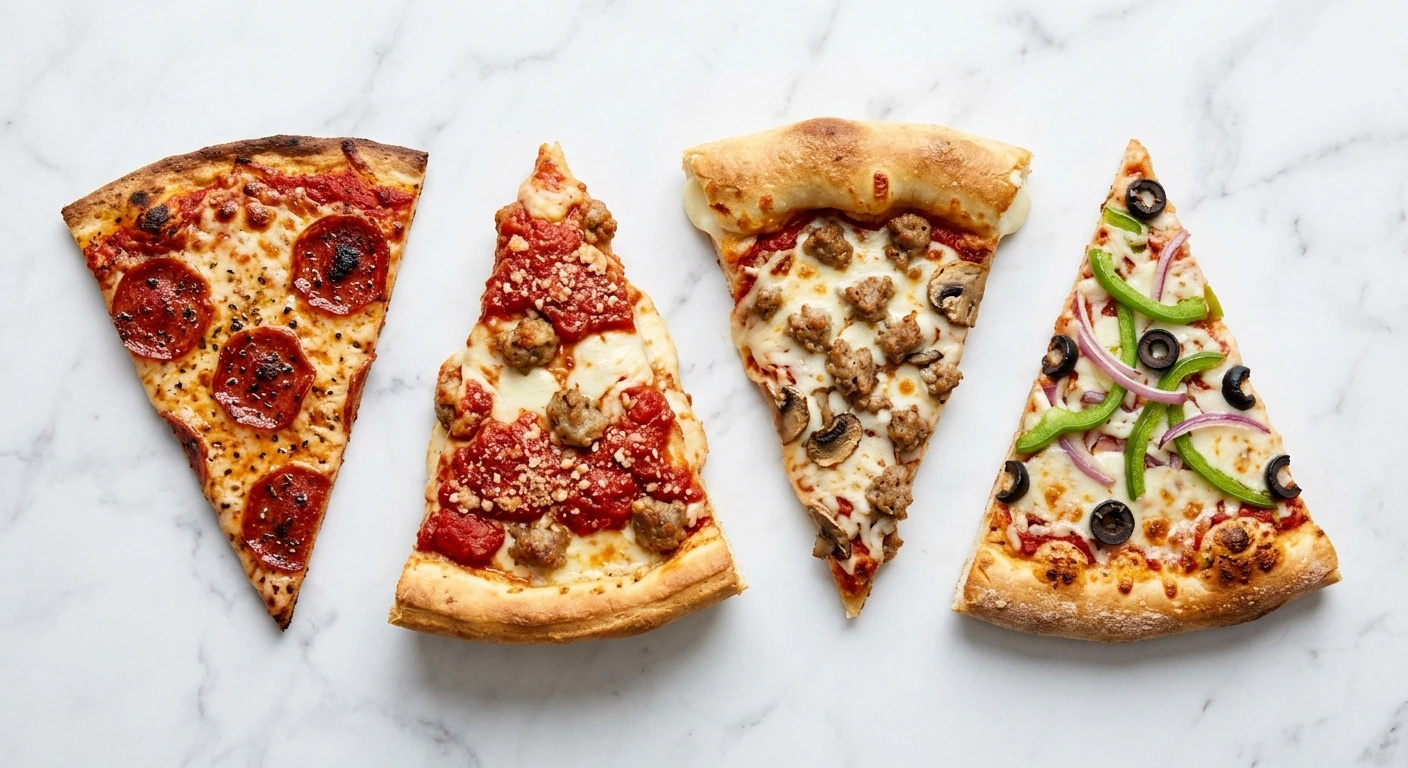
Crust thickness moves the calorie count more than any topping does. More dough means more carbs before anything else lands on the pizza.
- Cauliflower crust: ~100–130 calories — the lowest-carb option on this list, though texture and taste differ noticeably from wheat crust.
- Neapolitan: ~170 calories — the lightest traditional wheat slice.
- Thin crust: 190–250 calories.
- Hand-tossed/regular: 250–300 calories — what most people picture as "a slice."
- Pan crust: 280–320 calories, thanks to the oiled pan.
- Stuffed crust: 300–450 calories, from the cheese baked into the edge.
- Deep dish/Chicago: 350–640 calories, depending on how thick the cheese and sauce layer runs.
The reason crust matters this much comes down to surface area and dough weight. A thin crust slice uses roughly half the dough of a hand-tossed slice cut from the same size pizza, and dough is almost pure carbohydrate. Cheese and sauce quantities stay fairly similar across styles, so the crust alone can swing a slice by 100+ calories before a single topping is added. That's also why "large pizza" isn't a useful unit on its own — a large thin crust and a large deep dish from the same restaurant can differ by over 1,500 calories for the whole pie.
See how that plays into your total day in our how many calories should I eat per day guide.
Is Pizza Keto-Friendly?
Regular pizza crust is not keto-friendly. A single hand-tossed slice carries 30 to 33 grams of carbs, almost entirely from the dough, which is enough to use up most of a day's carb allowance on a strict keto plan in one slice.
Cauliflower crust changes the math significantly. A cauliflower crust slice typically has just 5 to 8 grams of net carbs, since the base is made from riced cauliflower and egg or cheese instead of wheat flour. It's not identical in taste or texture to a real crust, but it's the closest thing to keto-friendly pizza that still comes as an actual slice you can hold. Almond flour and fathead dough crusts (mozzarella and almond flour) are two other low-carb options worth knowing, usually landing in a similar 5 to 10 gram carb range per slice.
Toppings matter too. Pepperoni, sausage, extra cheese, and vegetables are all low-carb. Anything with pineapple, BBQ sauce, or a sweet glaze adds carbs fast and works against a low-carb order regardless of the crust underneath it.
Calories by Pizza Chain
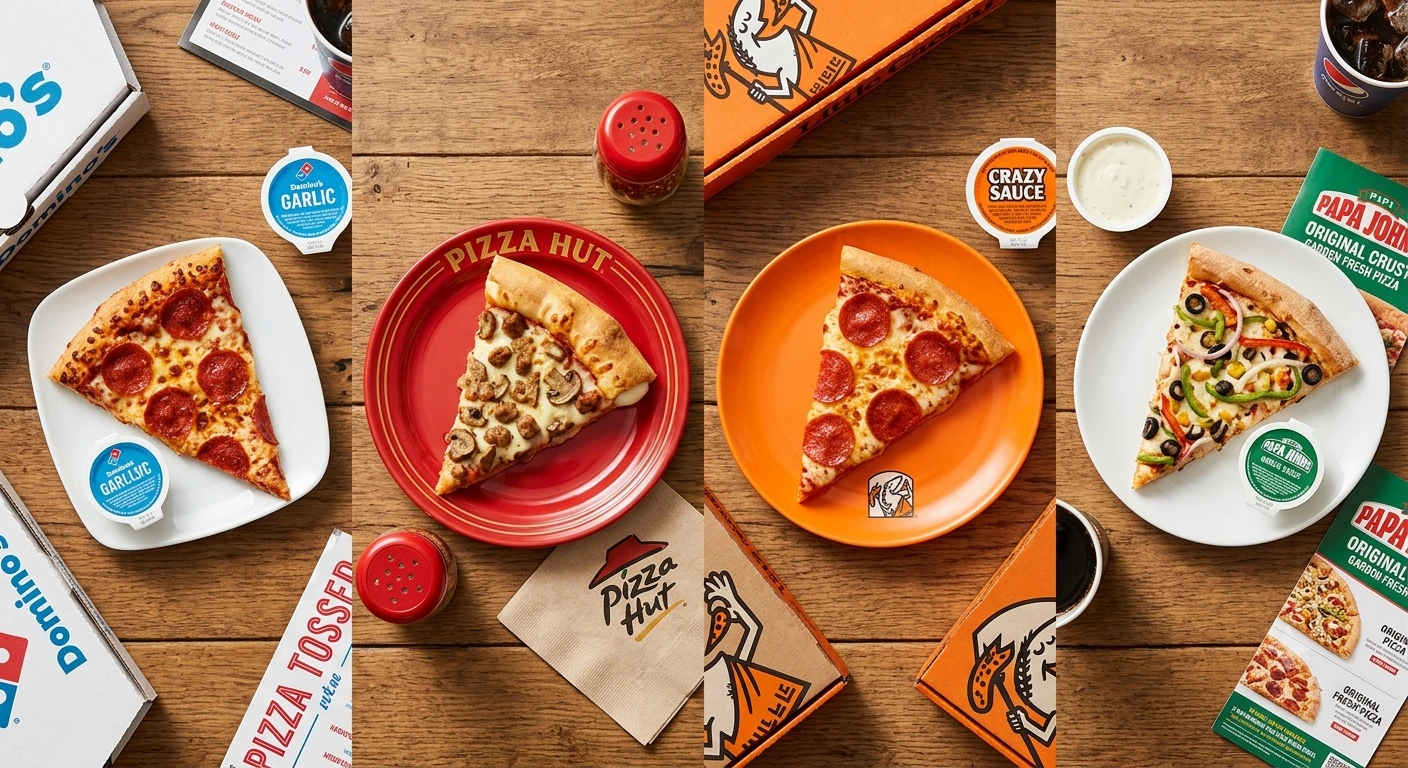
| Chain | Calories/Slice |
|---|---|
| Domino's (hand-tossed) | ~200 |
| Pizza Hut (hand-tossed) | 200–220 |
| Papa John's (original) | 210–257 |
| Little Caesars | 235–250 |
| Sam's Club deli slice | ~390 |
| Costco / Sam's Club hot-bake | 650–720 |
Source: Domino's official nutrition page and brand-published data.
Notice the warehouse gap — a cold Sam's Club deli slice (390) and a Hot Bake slice (670) aren't the same food. Lumping "Costco pizza" into one number is where most calorie articles get it wrong. The gap comes down to slice size, not just recipe — a warehouse hot-bake slice is roughly twice the size of a standard pizzeria slice, so treating it as "one slice" in your head undercounts by 300+ calories without you noticing.
Frozen pizza brands sit in a similar gray zone. DiGiorno runs around 310–330 calories per serving, and Red Baron and Tombstone land close to the same range. The catch is that "serving" on a frozen pizza box often means one-fifth or one-sixth of the whole pizza, not one slice as you'd cut it at home. Cut the same box into 8 pieces instead of the labeled 5, and you're eating more than one serving without changing a single thing about how it looks on your plate.
Domino's Pakistan: Calories per Slice
Most calorie guides stop at the US chains. Here's what an 8-slice large actually costs you, straight from Domino's Pakistan's own nutrition data:
| Pizza | Calories/Slice |
|---|---|
| Veggie Feast | 234 |
| Pakistani Hot | 247 |
| Chicken Tikka | 249 |
| Super Cheese | 256 |
| Creamy Tikka | 319 |
| Garlic Mayo | 354 |
| Alfredo | 401 |
The pattern is the sauce, not the toppings. Tomato-based pizzas (Chicken Tikka, Pakistani Hot, Veggie Feast) stay under 260. Cream-based ones (Alfredo, Garlic Mayo, Creamy Tikka) run 60 to 150 calories higher for the same slice size. A Chicken Tikka slice at 249 calories is close to two plain rotis — see the comparison in our roti and weight loss guide.
Homemade vs Restaurant Slice
A homemade slice usually lands between 200 and 350 calories, mostly because you're the one deciding how much cheese and oil goes on it. Restaurant and chain slices tend to run higher — often 250 to 500+ calories — for three reasons that have nothing to do with the toppings on the menu: more oil worked into the dough for texture, more cheese than most home cooks would use by default, and richer sauce bases built for flavor over calorie count.
This isn't really a "homemade is healthy, restaurant is bad" story. It's a control story. At home, you pick the crust thickness, the cheese amount, and the sauce. At a restaurant, those decisions were already made before your order arrived — usually leaning toward more cheese and more oil, because that's what tends to sell. A homemade whole wheat thin crust pizza with light mozzarella and vegetables can land around 220 calories a slice. The same style from a chain, on their standard crust with their standard cheese amount, often comes in closer to 280–300. Across three or four slices, that gap adds up to roughly an extra slice's worth of calories you didn't plan for.
2 Slices, Whole Pizza & Macros
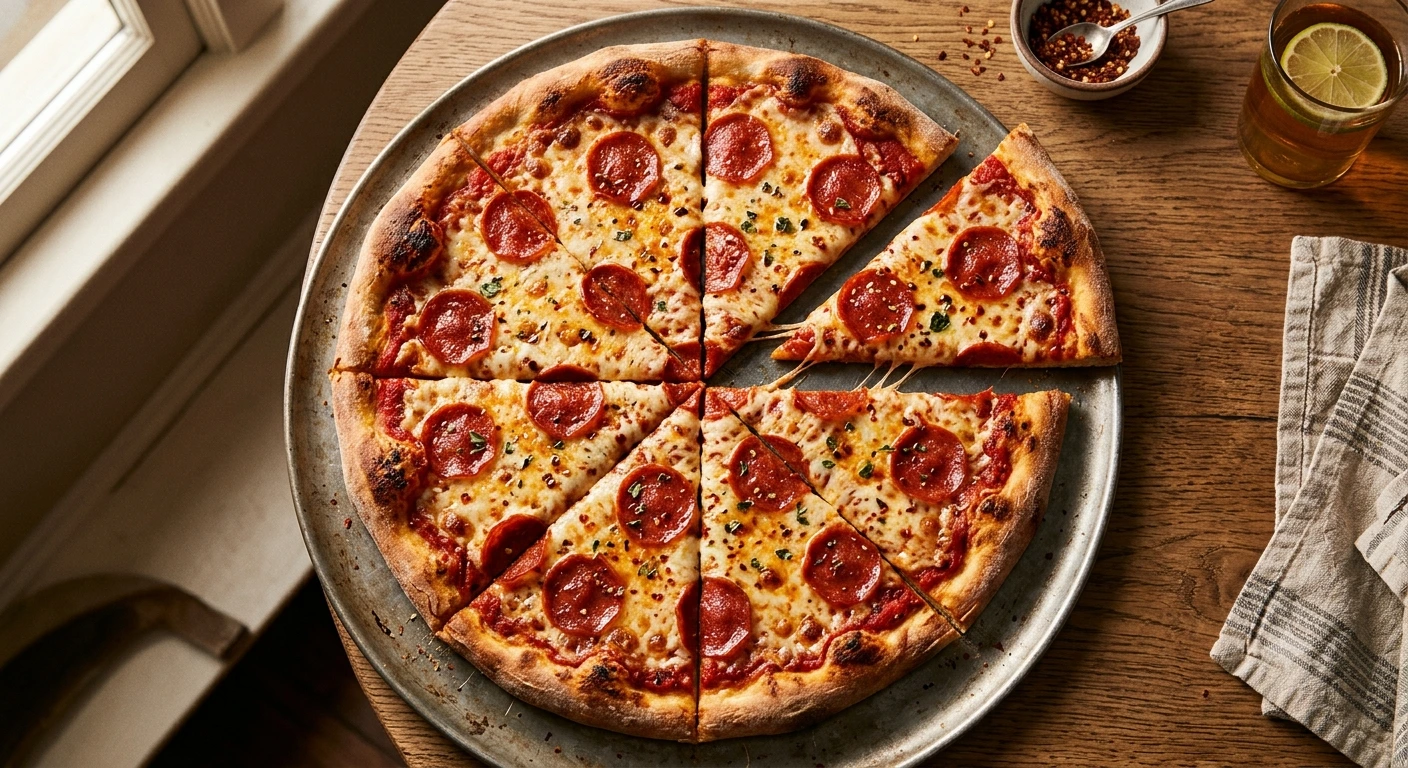
Two slices of regular cheese pizza run 500–570 calories. Two slices of deep dish can hit 700–900 — close to half a day's calories for many adults, in one sitting. A whole large cheese pizza (8 slices) totals roughly 2,000–2,700 calories; split four ways that's under 700 each, split two ways it's over 1,300 each. Keep in mind slice count alone doesn't fix portion size, either — a medium pizza cut into 8 slices gives you noticeably smaller pieces than an extra-large cut into the same 8, so "one slice" from a medium and one from an XL aren't really the same amount of food.
One average slice (~265 calories) breaks down to roughly 10–12g protein, 30–33g carbs, 9–11g total fat (around 4–5g of that saturated), and 550–700mg sodium — close to a quarter of the daily limit recommended by the American Heart Association, before you even add extra cheese.
The sodium figure is the one people underestimate the most, because it doesn't show up in how a slice looks or tastes the way calories or fat might. Two slices of a standard cheese pizza can already put you near a quarter of a full day's sodium limit — and that's before any pepperoni, extra cheese, or a side dip cup enters the picture. If you're tracking sodium alongside calories for any reason, pizza night is worth logging properly rather than estimating.
Protein is the flip side worth noticing. At 10–12g per slice, three or four slices of regular cheese pizza can put you in the 30–48g protein range for a single meal — not far off a standard protein-focused dinner, even though pizza isn't usually thought of that way. Adding grilled chicken or extra cheese pushes that number higher without changing the calorie count as dramatically as pepperoni or sausage would.
Does One Slice Ruin a Diet?
No. What decides the outcome is your total calories across the day, not one meal in isolation — a point backed by the Harvard T.H. Chan School of Public Health, which points to overall dietary pattern over any single "good" or "bad" food.
Two slices of thin crust veggie pizza (~460 calories) fits into almost any deficit. Three slices of deep dish pepperoni (~1,800 calories) can eat your entire day's target on its own — same restaurant, completely different outcome, because portion and crust did the work, not the pizza itself. Our macros from TDEE guide walks through fitting meals like this into your numbers without overthinking it.
The practical move is portioning and logging, not avoiding pizza completely. One heavier meal rarely undoes progress on its own — it's the pattern across weeks that actually moves the needle, which is also the general direction of guidance from the CDC's healthy weight resources. If pizza is a regular part of your week rather than an occasional thing, it's worth weighing or measuring your usual order once, just so your mental "one slice" number actually matches what's on your plate.
Mistakes That Hide Calories
Confusing "one serving" with "one slice." Frozen pizza boxes often list nutrition per one-fifth or one-sixth of the pizza, not per slice as you'd cut it. Always check the label before assuming your slice equals one serving.
Skipping the dip cup. A Western-style garlic butter or ranch dip cup can run 150–200 calories — nearly as much as the slice you're dipping it with. Not every dip is like this, though. Domino's Pakistan's dip cups run closer to 22 calories, based on their official nutrition data, so the hidden calories on that menu come from the pizza itself, not the dip.
Treating a warehouse slice like a regular slice. A Costco or Sam's Club hot-bake slice is close to double the size of a standard pizzeria slice. Counting it as "one slice" in your head can throw off your daily count by 300+ calories in a single sitting.
How to Cut the Calories
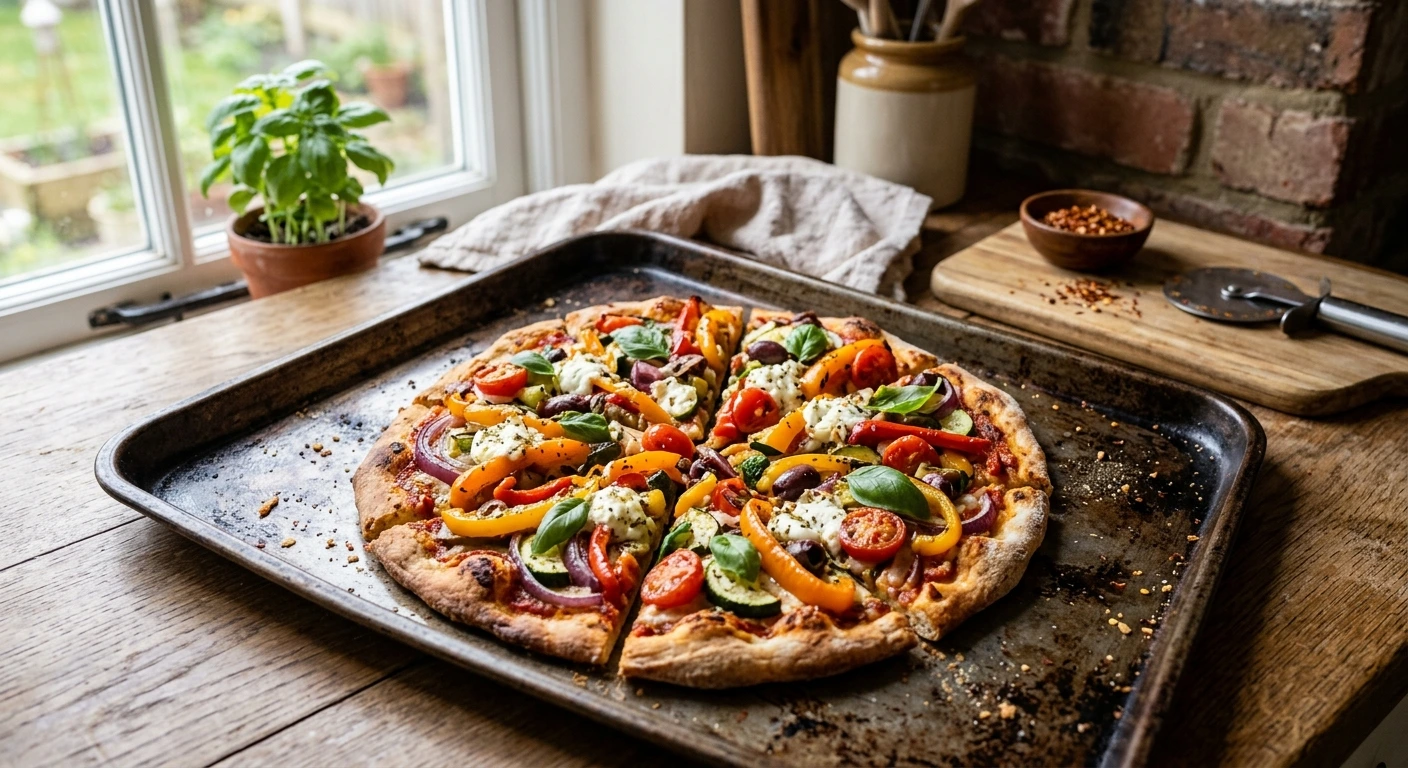
- Pick thin crust or cauliflower crust over regular or deep dish whenever it's an option.
- Ask for light cheese instead of extra cheese.
- Load up on vegetables — flavor and volume for almost no calories.
- Blot the surface grease with a napkin before eating; it removes real calories.
- Choose a tomato-based sauce over a cream or alfredo base.
- Order a personal-size pizza so portion control isn't a guess.
- Start with a large side salad before the pizza arrives — the volume and fibre fill you up first, so you naturally reach for one or two fewer slices without trying to.
FAQs
How many calories are in one slice of pizza?
A regular cheese slice averages 250 to 285 calories. Thin crust drops to 190-250, and deep dish can climb past 500.
How many calories are in a Domino's slice?
A Domino's hand-tossed slice averages around 200 calories. Domino's Pakistan's Chicken Tikka slice runs close to 249 calories.
Is one slice of pizza bad for a diet?
No. One slice of thin crust or tomato-based pizza fits into most calorie budgets without any issue.
How many calories are in a Costco pizza slice?
A Costco food court slice runs close to 700 calories, almost double a regular pizzeria slice.
Is pizza keto-friendly?
Regular crust pizza is not keto-friendly since one slice can carry 30+ grams of carbs. A cauliflower crust slice drops to around 5-8 grams of carbs, making it a workable option on a low-carb plan.
Sources: USDA FoodData Central, official brand nutrition pages linked above, and the American Heart Association / Harvard Nutrition Source for daily guidance.
Note: This guide is for general informational and tracking purposes. If you have a history of disordered eating, please consult a registered dietitian or healthcare professional before changing how you track food or calories.