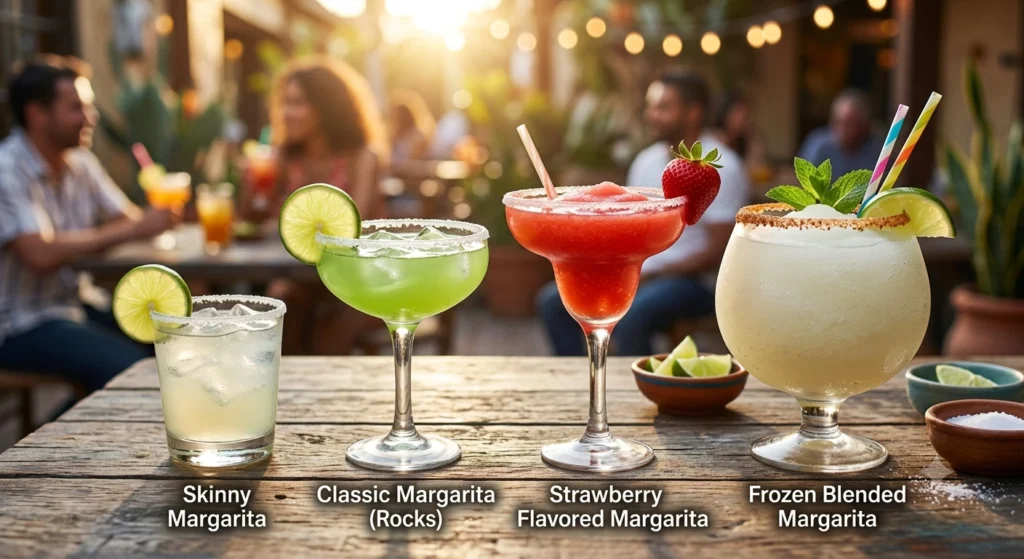
A classic margarita on the rocks has about 170 to 250 calories, based on a standard 2 oz tequila, 1 oz triple sec, 1 oz lime juice pour. Restaurant versions usually run higher — 300 to 600 calories — because of bigger pours and premade sour mix. Frozen and flavored versions run higher still, sometimes past 500.
The real number comes down to three things: pour size, whether triple sec is full-strength or reduced, and whether the mixer is fresh lime juice or a sugary premade mix. Below is the full breakdown, the math behind it, a calculator you can plug your own drink into, and where a margarita fits into a normal day's calorie budget. If you haven't set that daily number yet, start with our TDEE calculator — it takes under two minutes.
Table of Contents
- Margarita Calorie Calculator
- What's in a Margarita (Ingredient by Ingredient)
- Margarita Calories by Type
- The Skinny Margarita — Named and Explained
- Restaurant Chain Data
- Carbs and Sugar in a Margarita
- Is a Margarita Keto-Friendly?
- A Note on Alcohol and Calorie Tracking
- How It Compares to Other Drinks
- Fitting a Margarita Into Your Day
- FAQs
Margarita Calorie Calculator
Build your actual drink below and see the real total, rather than relying on a generic average.
🍹 Margarita Calorie Calculator
180 kcal
See how this fits your day → Calculate Your TDEE
What's in a Margarita (Ingredient by Ingredient)
A margarita is built from three core ingredients, and each one contributes calories in a completely different way. That's the real reason "how many calories are in a margarita" gets such a wide range of answers online — most sources are describing different ratios of the same three things.
Tequila
Tequila has zero carbohydrates and zero sugar. A 1.5 oz pour has about 97 calories, and every one of them comes from alcohol. Alcohol carries 7 calories per gram, almost double the 4 calories per gram in carbs or protein — which is why alcohol content, not sugar, is often the bigger calorie driver in a well-made margarita.
Triple Sec (Orange Liqueur)
Triple sec, Cointreau, or Grand Marnier adds roughly 75 calories per ounce along with about 11 grams of sugar. Ounce for ounce, this is the most calorie-dense ingredient in the glass, and it's also the one most recipes are flexible about — cutting it in half or leaving it out entirely is where most of the "skinny" version's savings come from.
Lime Juice
Fresh lime juice runs about 8 calories per ounce with almost no sugar. Bottled margarita mix is a different food entirely — mostly sugar syrup — and it's the single biggest reason a restaurant margarita measures so much higher than a home version made with real limes.
Salt Rim
Salt adds zero calories. It does add sodium, which matters separately if you're watching that number, but it has no effect on the calorie total.
Margarita Calories by Type
| Type | Typical Size | Calories |
|---|---|---|
| Classic, on the rocks | 3.3–4 oz | 170–250 |
| Skinny margarita (fresh lime, light triple sec) | 4 oz | 100–150 |
| Frozen (mix-based) | 10–12 oz | 300–450 |
| Flavored frozen (mango, strawberry) | 10–12 oz | 350–550 |
| Standard restaurant serving | 8–10 oz | 220–350 |
| Premium restaurant serving | 10–14 oz | 400–600+ |
The Skinny Margarita — Named and Explained
"Skinny margarita" isn't a marketing term for a smaller glass — it's a specific recipe change, and it's worth knowing by name since most bars will make one if you ask. A skinny margarita keeps the tequila and lime juice exactly as they are in a classic recipe, but replaces the triple sec with a small amount of agave nectar or a splash of orange juice, and skips any premade sour mix entirely.
That one substitution is what takes a 250-calorie classic margarita down to roughly 100 to 150 calories, mostly because triple sec's 75 calories and 11 grams of sugar per ounce simply aren't in the glass anymore. If you want to order one, the phrase that works at most bars is: "tequila, fresh lime juice, a small amount of agave, no triple sec, no sour mix."
Restaurant Chain Data
Published nutrition data varies a lot by restaurant, but the pattern is consistent: fresh-lime versions run lowest, standard tequila pours sit in the middle, and specialty or flavored versions run highest.
At Chili's, the lowest-calorie option on the standard menu is reported around 150 calories, while their standard tequila-based option runs 240 to 350 depending on pour size. At On The Border, a standard house version is reported around 220 calories, a specialty version around 340, and a fresh-lime version at roughly 100 calories at the same chain — the same pattern seen everywhere: the mixer, not the tequila, decides most of the gap.
Carbs and Sugar in a Margarita
Calories only tell part of the story if you're also watching carbs. Since tequila itself has zero carbs, virtually all of a margarita's carbohydrate content comes from triple sec and any sweetened mixer.
| Version | Carbs | Sugar |
|---|---|---|
| Classic (tequila, triple sec, fresh lime) | 10–17g | 9–15g |
| Skinny (no triple sec, splash of agave) | 4–7g | 3–6g |
| Premade mix (restaurant standard) | 25–36g | 20–30g |
Is a Margarita Keto-Friendly?
Plain tequila fits a keto diet on its own — zero carbs, zero sugar. The margarita as a whole depends entirely on what else goes in the glass. A classic recipe with triple sec and premade mix easily runs 25 to 36 grams of carbs, which is too much for most keto plans in a single drink.
A "keto margarita" is really just a skinny margarita with the agave swapped for a sugar-free sweetener like stevia or monk fruit. Done that way, a margarita can drop to 2 to 4 grams of carbs — tequila, fresh lime, a sugar-free sweetener, and nothing else.
A Note on Alcohol and Calorie Tracking
Alcohol calories are worth tracking accurately, since they add up faster than food calories and offer no nutritional value in return. If you're managing diabetes, liver conditions, or take medications that interact with alcohol, it's worth talking to a doctor about how alcohol fits your specific situation, since alcohol affects blood sugar and medication metabolism differently than food does. The National Institute on Alcohol Abuse and Alcoholism has more detail on what moderate drinking looks like and who should be more cautious.
How It Compares to Other Drinks
- Vodka soda: 90–100 calories
- Skinny margarita: 100–150 calories
- Standard beer (12 oz): 150 calories
- Classic margarita (on the rocks): 170–250 calories
- Frozen margarita: 300–450 calories
- Piña colada: 400–650 calories
Fitting a Margarita Into Your Day
It helps to know your baseline daily target before slotting in any one drink. Check how many calories to eat per day and use that number as your reference point. If you're working within an active calorie deficit, a 150-calorie skinny margarita and a 550-calorie frozen strawberry margarita represent very different chunks of that budget, even though both get called "a margarita."
For logging a specific recipe rather than relying on an average, the Meal Calorie Estimator lets you enter each ingredient by amount. Tracking calories accurately matters more with drinks than with most food, since restaurant pours and mixer amounts vary so much from what a "standard" recipe assumes. For the underlying nutrition data on tequila, triple sec, and lime juice used throughout this guide, USDA FoodData Central is a free source worth checking directly.
Frequently Asked Questions
How many calories are in a shot of tequila?
A 1.5-ounce measure of plain tequila has about 97 calories, all from alcohol, with zero carbohydrates and zero sugar.
Are margaritas high in sugar?
It depends on the recipe. A fresh-lime version with light or no triple sec has very little sugar. A version made with premade mix can carry 15 grams of sugar or more per serving.
How many calories are in a frozen margarita from a restaurant?
Restaurant frozen margaritas typically run 300 to 450 calories for a standard serving, with flavored versions often measuring higher still.
Does tequila contain carbohydrates?
No. Plain tequila has zero carbohydrates. The carbs in a margarita come from the triple sec and any added mixer or juice.
What is a skinny margarita and how many calories does it have?
A skinny margarita swaps out triple sec and premade mix for fresh lime juice and a small amount of agave or sugar-free sweetener. It typically runs 100 to 150 calories, roughly half of a classic margarita.
Is a margarita keto-friendly?
Not in its classic form, since triple sec and premade mix add too many carbs. A skinny margarita made with a sugar-free sweetener instead of agave can drop to 2 to 4 grams of carbs, which fits most keto plans.
How does a margarita compare to other alcoholic beverages?
It sits in the middle of the range for mixed drinks — higher than a vodka soda or standard beer, lower than a frozen or cream-based cocktail like a piña colada.
Sources: USDA FoodData Central, published restaurant nutrition data, and the National Institute on Alcohol Abuse and Alcoholism for drinking guidance.
Note: This guide is for general informational and tracking purposes and isn't medical advice. If you're managing a health condition affected by alcohol, check with a doctor about what fits your situation.